Chatbots for Small Business: A Comprehensive Guide
Small businesses run on tight margins and even tighter schedules. You're wearing ten hats, answering emails at midnight, and still losing leads because nobody picked up the phone at 2 PM on a Tuesday. That's exactly why chatbots have become a go-to tool for businesses that can't afford a full support team but still need to show up for their customers around the clock. This guide to chatbots for small business covers everything from picking the right platform to measuring real results. Whether you're a solo founder or managing a team of fifteen, there's a chatbot setup that fits your budget and your workflow. The goal here isn't hype. It's a practical roadmap you can actually use.
The Evolution of Chatbots in the Small Business Landscape
Chatbots aren't new. The first ones appeared in the 1960s as basic text programs. But for decades, they stayed locked inside enterprise budgets and IT departments. That changed around 2016 when Facebook opened Messenger to bots, and suddenly any business with a Facebook page could deploy one. The real shift happened when no-code platforms dropped prices to $20-50 per month. Small businesses finally had access to tools that Fortune 500 companies had been using for years.
Understanding Rule-Based vs. AI-Powered Chatbots
Rule-based bots follow a script. You map out decision trees: "If the customer asks about pricing, show this message." They're predictable, easy to build, and cheap. The downside? They break the moment someone asks a question you didn't anticipate.
AI-powered bots use natural language processing to understand intent. A customer can type "how much does this cost" or "what's the price" or "is this expensive" and the bot gets it. These bots learn over time. They handle more complex conversations and feel less robotic. The tradeoff is cost and setup time. For most small businesses, a hybrid approach works best: rule-based flows for common questions, with AI handling the curveballs.
Why Small Businesses are Adopting Conversational AI
The math is simple. A Tidio survey found that 62% of consumers prefer messaging a chatbot over waiting on hold. Meanwhile, Juniper Research estimates chatbots will save businesses $11 billion annually by 2025. Small businesses feel this acutely. You can't hire three support reps for the night shift. But a bot can handle 80% of routine questions without breaking a sweat. The remaining 20% gets routed to you or your team during business hours. That's not replacing humans. That's letting humans focus on work that actually needs a human brain.
Key Benefits of Implementing Chatbot Technology
The pitch for chatbots sounds great on paper. But what does the data actually say about measurable impact? Here's where the numbers get interesting.
24/7 Customer Support and Lead Generation
Your website gets traffic at all hours. A HubSpot study showed that responding to a lead within five minutes makes you 21 times more likely to qualify that lead. After thirty minutes, your odds drop off a cliff. A chatbot doesn't sleep. It greets visitors at 3 AM, asks qualifying questions, and captures contact info before the prospect forgets about you.
Key benefits of always-on chat support:
- Lead capture rate increase: Businesses using chatbots report 30-50% more qualified leads from their website traffic.
- Response time reduction: Instant replies versus the industry average of 12 hours for email support.
- After-hours coverage: Roughly 40% of chat conversations happen outside standard business hours, according to Drift's benchmark data.
- HubSpot, "Lead Response Management Study"
- Juniper Research, "Chatbot Cost Savings Report, 2025"
- Tidio, "Consumer Chatbot Preferences Survey, 2023"
- Salesforce, "State of the Connected Customer Report"
- Drift, "Conversational Marketing Benchmark Report"
- IBM, "Chatbot Automation Statistics"
Reducing Operational Costs and Improving Efficiency
Hiring a full-time customer service rep costs $35,000-45,000 per year in the US. A chatbot platform runs $30-300 per month depending on features. That's not a small difference. IBM estimates chatbots can handle up to 80% of routine customer questions. Your team stops bleeding time on "What are your hours?" and "Where's my order?" and starts working on problems that grow the business.
Personalizing the Customer Journey at Scale
A good chatbot remembers returning visitors. It knows what they browsed last time. It can recommend products based on past purchases or browsing behavior. Salesforce research shows 66% of customers expect companies to understand their individual needs. You can't personally greet every website visitor. But your bot can, and it can do it with context that feels personal rather than generic.
Strategic Use Cases for Different Industries
Not every business uses a chatbot the same way. The best implementations match the bot's capabilities to the specific pain points of your industry.
E-commerce: Order Tracking and Product Recommendations
Online stores deal with the same five questions on repeat: Where's my order? What's your return policy? Do you have this in stock? Can I get a discount? What size should I pick? A chatbot handles all of these instantly. It pulls tracking info from your shipping provider, walks customers through size guides, and suggests related products. Some e-commerce bots drive 15-25% of total revenue through personalized product recommendations during chat conversations.
Service-Based: Automated Scheduling and FAQ Handling
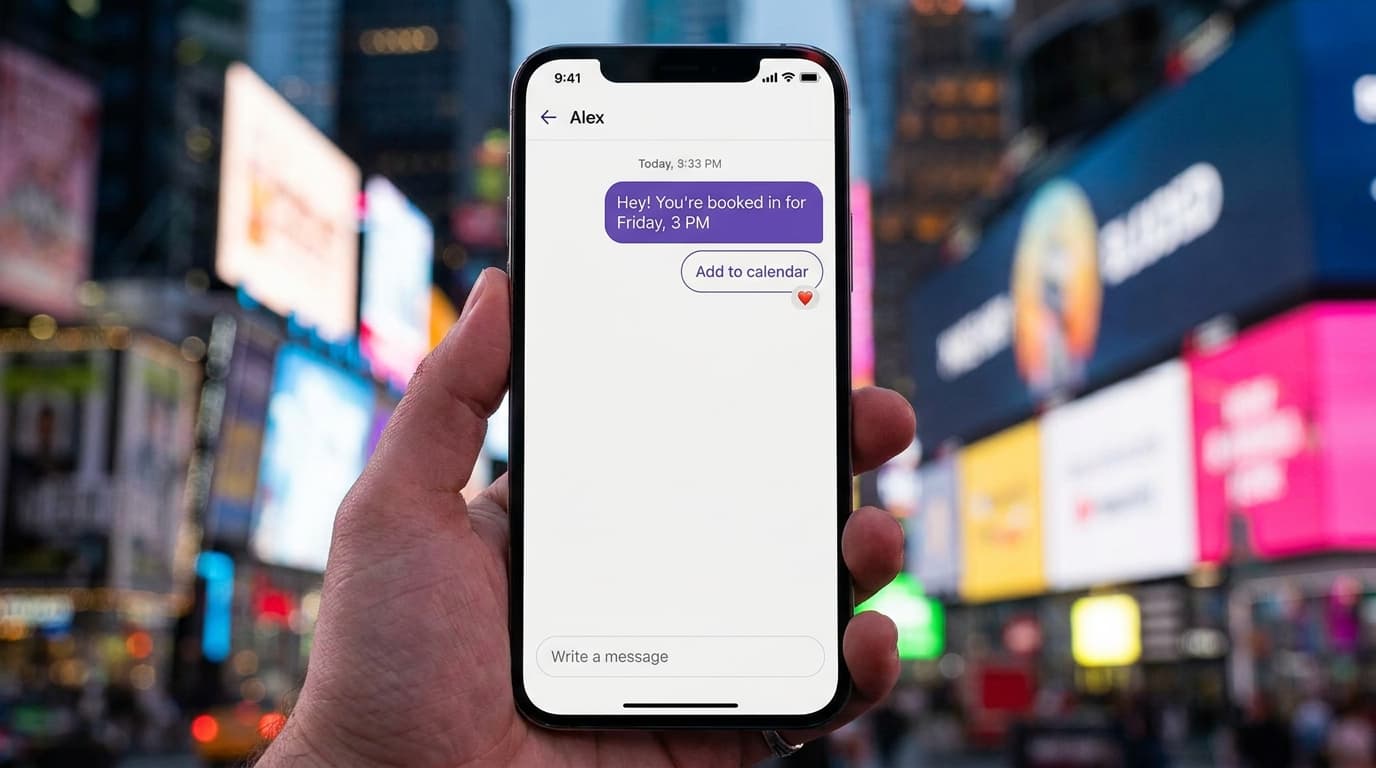
If you run a salon, dental office, consulting firm, or any appointment-based business, scheduling is your biggest time sink. A chatbot integrated with Calendly or Acuity handles booking without back-and-forth emails. It shows available slots, confirms appointments, and sends reminders. For service businesses, the tab-switching tax of juggling calendars, emails, and phone calls chips away at productivity every single day. A bot eliminates that friction.
Choosing the Right Chatbot Platform for Your Needs
Picking a platform feels overwhelming. There are dozens of options ranging from free to enterprise-priced. The right choice depends on your technical comfort, budget, and integration needs.
Evaluating No-Code vs. Custom-Built Solutions
No-code platforms like Tidio, ManyChat, and Chatfuel let you build a working bot in an afternoon. No tech skills needed. Really. You drag and drop conversation flows, connect your Facebook page or website, and you're live. These platforms work great for straightforward use cases like lead capture, FAQs, and appointment booking.
Custom-built solutions make sense if you need deep integration with proprietary systems or highly specific conversation logic. But they cost $5,000-50,000 to develop and require ongoing maintenance. For 90% of small businesses, a no-code platform is the right starting point.
Step one: List your top three use cases (lead capture, support, scheduling, etc.). Step two: Sign up for free trials on two or three platforms. Step three: Build a simple bot that handles your most common customer question. Step four: Test it with real visitors for two weeks before expanding.
Integration with CRM and Marketing Tools
Your chatbot shouldn't live in isolation. The real power comes from connecting it to your existing tools. Most platforms integrate with HubSpot, Mailchimp, Zapier, Shopify, and Google Sheets. When a bot captures a lead, that contact should flow directly into your CRM. When someone asks about a product, that data should inform your email marketing. Disconnected tools create disconnected experiences. Make sure your platform plays nice with your stack before committing.
Best Practices for Launching and Optimizing Your Bot
A bad chatbot is worse than no chatbot. We've all rage-clicked through bots that loop endlessly without answering our question. Here's how to avoid becoming that business.
Designing Natural and Helpful Conversational Flows
Write like a human, not a manual. Use short sentences. Ask one question at a time. Give users clear button options but also let them type freely. Start with your top ten most-asked questions and build flows around those first. Test every conversation path yourself before going live. If you hit a dead end, your customers will too.
Keep your bot's personality consistent with your brand. A law firm's bot should sound different from a skateboard shop's bot. And always, always tell users they're talking to a bot. Transparency builds trust. Pretending to be human chips away at it.
Maintaining the Human Touch with Live Agent Handoff
The best chatbot strategies include an escape hatch. When a conversation gets complex, emotional, or high-stakes, the bot should hand off to a real person. Platforms like Wexio offer a "Route to Operator" feature that transfers the chat to a live agent with full conversation history. The customer doesn't have to repeat themselves. The agent sees everything the bot discussed. That handoff moment is where you either win or lose the customer's confidence.
Set clear triggers for handoff: negative sentiment, repeated failed responses, or explicit requests to talk to a human. Don't make people fight the bot to reach a person.
Measuring Success and Future-Proofing Your Strategy
You've launched your bot. Now what? Track the metrics that matter. Start with containment rate: the percentage of conversations the bot resolves without human help. Aim for 70-80%. Monitor customer satisfaction scores after bot interactions. Watch your lead conversion rate before and after implementation. Use median values rather than just averages, since a few outlier conversations can skew your data.
Review chat transcripts weekly for the first month. You'll spot gaps in your flows, questions you didn't anticipate, and moments where users drop off. Every transcript is free user research. The businesses that win with chatbots treat them as living systems, not set-and-forget tools.
Looking ahead, conversational AI is getting smarter and cheaper fast. GPT-powered bots can now handle nuanced conversations that would have required custom development two years ago. Small businesses that build their chatbot muscle now will have a real advantage as these tools mature. Start simple. Measure everything. Iterate based on real data. Do what you love, and let the bot handle the rest. We've got you covered.
Sources: