Small businesses run on tight margins and even tighter schedules. Every missed customer question or slow response chips away at trust and revenue. That’s exactly why AI chatbots have become a practical tool for smaller companies looking to punch above their weight. You don’t need a massive support team or a six-figure software budget to deliver fast, helpful customer interactions around the clock. The right chatbot can handle routine inquiries, capture leads, and free your staff to focus on work that actually requires a human brain. This guide breaks down how AI chatbots boost efficiency and customer service for small businesses, what to look for when choosing a platform, and how to measure whether your investment is paying off. Whether you’re a solo founder or managing a team of twenty, there’s a clear path to getting this right without overcomplicating things.
The Strategic Role of AI Chatbots in Small Business Growth
AI chatbots aren’t just a tech trend for Fortune 500 companies. They’re a genuine operational tool that helps small businesses grow faster with fewer resources. A 2023 Salesforce report found that 83% of customers expect to interact with someone immediately when they contact a company. That’s a tough standard when you’ve got three employees and no night shift.
Leveling the Playing Field Against Enterprises
Big companies throw hundreds of agents at their support queues. You can’t do that. But a well-configured chatbot handles the same volume of routine questions at a fraction of the cost. Think about it: a local e-commerce shop using a chatbot can answer shipping questions, process returns, and recommend products just like a major retailer’s support page. The customer doesn’t know or care about your team size. They care about getting answers fast. Chatbots close that gap between what customers expect and what a lean team can deliver.
The Shift from Rule-Based to Generative AI for SMBs
Older chatbots followed rigid decision trees. If a customer asked something outside the script, the bot hit a dead end. Generative AI changed that. Modern bots understand context, handle typos, and respond to questions they weren’t explicitly programmed for. Platforms like Wexio use this approach, letting small businesses train a bot on their own knowledge base without writing a single line of code. The result is a bot that sounds like your brand, not a robot reading a manual. For small businesses, this shift means you can deploy a genuinely useful assistant in days, not months.
Automating Core Operations to Maximize Human Capital
Your team’s time is your most expensive resource. Every hour spent answering "What are your hours?" is an hour not spent closing a deal or improving your product. Chatbots absorb that repetitive load so your people can do higher-value work.
Appointment Scheduling and Reservation Management
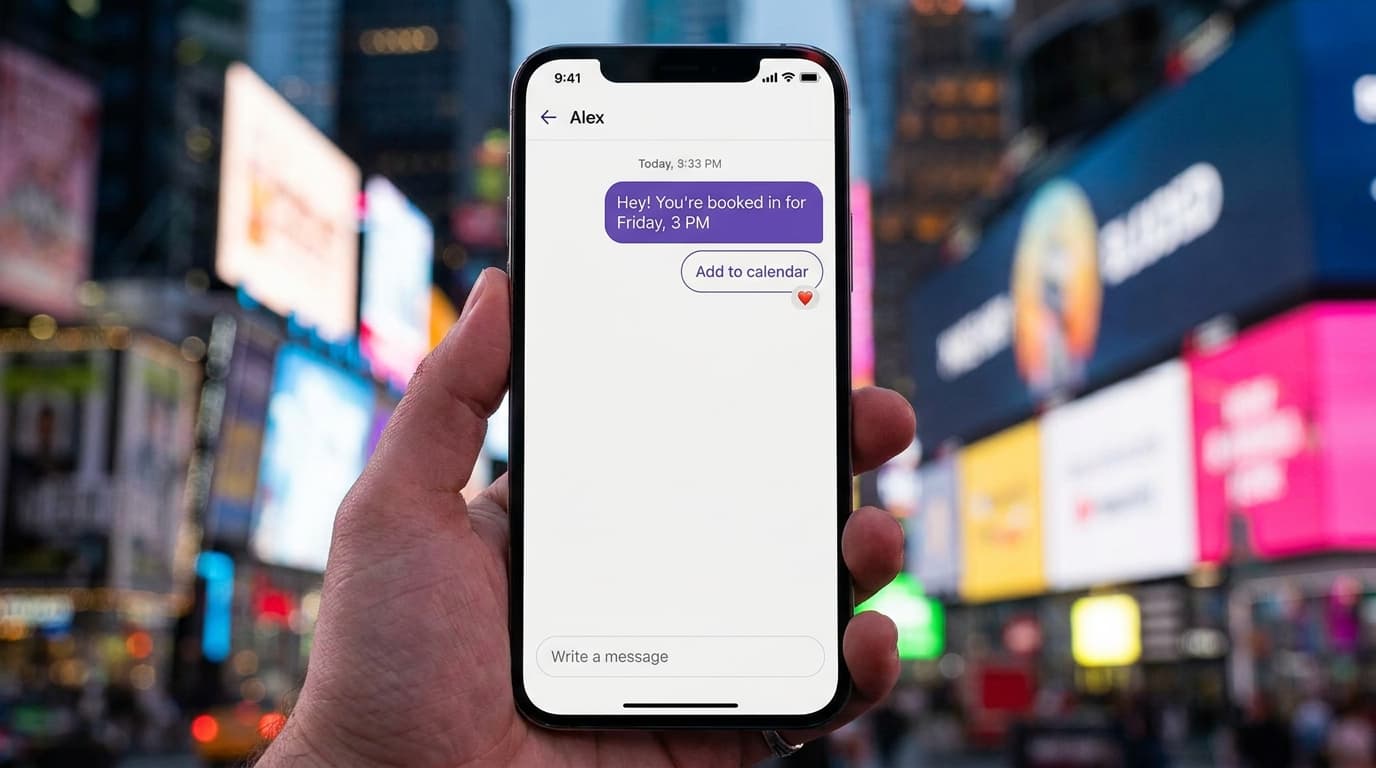
If you run a salon, clinic, or consulting firm, scheduling eats a shocking amount of time. A chatbot connected to your calendar handles bookings, sends confirmations, and manages cancellations without human involvement. One dental practice in Austin reported saving 15 hours per week after automating appointment scheduling through a chatbot. That’s nearly two full workdays reclaimed every week. The bot asks the right questions: preferred time, service type, insurance info. It books the slot and moves on.
Streamlining Internal FAQs and Employee Onboarding
Chatbots aren’t just customer-facing. Internal bots can answer employee questions about PTO policies, benefits, or how to submit an expense report. This is especially useful during onboarding, when new hires have dozens of questions they feel awkward asking repeatedly. A simple internal FAQ bot reduces the burden on your HR person (who’s probably also your office manager, accountant, and occasional IT support). It keeps answers consistent and available 24/7.
Driving Revenue Through Conversational Commerce
Chatbots don’t just save money. They make money. Conversational commerce turns chat interactions into sales opportunities, and it works particularly well for small businesses with limited marketing budgets.
Qualifying Leads in Real-Time Without Manual Intervention
A visitor lands on your website at 11 PM. They’re interested but have questions. Without a chatbot, they leave. With one, the bot engages them, asks qualifying questions like budget range and timeline, and routes hot leads to your inbox for morning follow-up. According to HubSpot, companies that respond to leads within five minutes are 100x more likely to connect. A chatbot ensures you never miss that window, even when you’re asleep. Wexio’s "Route to Operator" feature takes this further: when a lead shows strong buying signals or asks complex pricing questions, the bot hands off to a live agent instantly. No friction, no lost context.
Reducing Cart Abandonment with Proactive Support
Cart abandonment rates hover around 70% across e-commerce, according to Baymard Institute. That’s a lot of lost revenue. A chatbot that triggers when someone lingers on checkout can ask if they need help, offer a discount code, or clarify shipping costs. One Shopify store owner reported a 12% reduction in cart abandonment after adding a proactive chat widget. The bot didn’t do anything fancy. It just asked, "Need help finishing your order?" at the right moment. Sometimes that’s all it takes.
Enhancing Customer Service on a Limited Budget
Great customer service used to require a big team. That’s no longer true. AI chatbots for small business operations make it possible to deliver responsive, helpful support without hiring additional staff.
Providing 24/7 Availability Without Overnight Staffing
Your customers don’t keep business hours. A Forrester study found that 53% of online shoppers abandon a purchase if they can’t find a quick answer. A chatbot fills that gap during nights, weekends, and holidays. It handles common questions instantly and queues complex issues for your team to address in the morning. The key is setting clear expectations. Your bot should tell customers when a human will follow up if it can’t resolve the issue. Negative sentiment detection is a useful trigger here: if a customer expresses frustration, the bot should escalate to a live agent immediately rather than looping through scripted responses.
Multilingual Support for Diverse Local Markets
If you serve a diverse community, language barriers cost you customers. Modern AI chatbots handle multiple languages without requiring separate bots for each one. A restaurant in Miami, for example, can serve English and Spanish speakers from the same chat interface. This isn’t just a nice-to-have. It’s a competitive advantage in neighborhoods where bilingual service is expected but rarely delivered digitally.
Implementation Roadmap: Choosing and Deploying SMB Chatbots
Picking the right chatbot platform matters more than most people realize. The wrong choice leads to a clunky bot that frustrates customers and wastes your money.
Evaluating No-Code Platforms vs. Managed Services
You’ve got two main paths:
- No-code platforms like Wexio, Tidio, or ChatBot.com let you build and customize bots yourself. Pricing typically ranges from $19 to $99 per month. You get drag-and-drop builders, pre-built templates, and integrations with popular tools. Best for teams comfortable with basic tech setup.
- Managed services handle everything for you: design, deployment, and ongoing tuning. Costs run from $500 to $2,000+ per month. Best for businesses that want a hands-off approach or need complex workflows.
For most small businesses, a no-code platform is the right starting point. You can always upgrade later. Start simple, learn what your customers actually ask, and iterate from there.
Integrating with Existing CRM and POS Systems
A chatbot that doesn’t talk to your other tools creates more work, not less. Before committing to a platform, check that it integrates with your CRM (HubSpot, Salesforce, Zoho), your POS system, and your email marketing tool. The goal is a connected workflow. When a chatbot captures a lead, that contact should automatically appear in your CRM with conversation context attached. When someone asks about an order, the bot should pull status from your POS. These integrations turn a chatbot from a novelty into a real business tool.
Measuring Success and ROI for Small Business AI
Deploying a chatbot is step one. Knowing whether it’s working is step two, and it’s where most small businesses drop the ball.
Key Performance Indicators for Lean Teams
You don’t need a data science team to track chatbot performance. Focus on these metrics:
- Resolution rate: What percentage of conversations does the bot resolve without human help? Aim for 60-80% within the first three months.
- Response time: How fast does the bot reply? Under two seconds is the standard.
- Customer satisfaction (CSAT): Add a quick thumbs-up/thumbs-down rating at the end of each chat. Track the median score, not just the average, to account for outliers.
- Lead capture rate: How many chat conversations result in a new contact or booked meeting?
- Escalation rate: How often does the bot hand off to a human? A high rate means your bot needs better training data.
Review your chat transcripts weekly. They’re free user research. You’ll spot logic gaps, find questions your bot can’t handle, and discover what customers actually care about. That feedback loop is what separates a mediocre bot from one that genuinely drives results.
Making Your Chatbot Investment Count
Small businesses that use AI chatbots well share a common trait: they treat the bot as a team member, not a set-it-and-forget-it widget. Train it on real customer questions. Update it when your products or policies change. Escalate to humans when the situation calls for it. The businesses seeing the best returns are the ones reviewing transcripts, tweaking flows, and measuring what matters. You don’t need a massive budget or a technical background. You need a clear goal, the right platform, and the discipline to keep improving. If you’re ready to explore what a chatbot can do for your business, start with a free trial from a platform like Wexio and test it against your most common customer questions. The data will tell you everything you need to know.
Sources:
- Salesforce, "State of the Connected Customer," 2023
- HubSpot, "Lead Response Management Study"
- Baymard Institute, "Cart Abandonment Rate Statistics," 2024
- Forrester Research, "Customer Service Expectations Report"