Your customers don't think in channels. They fire off a WhatsApp message during lunch, follow up by email after work, and call your support line the next morning. They expect you to keep up. That expectation isn't unreasonable: 78% of consumers want consistent interactions across channels. Yet most businesses still treat each channel like a separate universe. The result? Frustrated customers repeating themselves and agents scrambling for context they don't have. A unified approach to customer support across every channel isn't just a nice idea. It's a survival strategy for any business that wants to keep customers coming back. This guide breaks down what that approach looks like, how to build it, and how to measure whether it's working.
Defining Omnichannel Support vs. Multichannel Approaches
Most businesses already offer multiple support channels. You've got email, phone, maybe a chatbot on your website. That's multichannel. But multichannel doesn't mean omnichannel. The difference is huge, and it matters more than you think.
Multichannel support means you're present on several platforms. Omnichannel support means those platforms talk to each other. A customer who starts a conversation on Instagram and switches to email shouldn't have to explain their problem twice. In a multichannel setup, they almost always do. In an omnichannel setup, the conversation follows them.
Think of it like this: multichannel is having five different phone lines that don't share a directory. Omnichannel is one phone system with full call history, no matter which line rings.
The Core Philosophy of Unified Customer Context
The beating heart of omnichannel customer support is context. Every interaction a customer has with your business adds to a story. The goal is to make sure every agent can read that story, regardless of which channel the customer uses next.
This means storing conversation history, purchase records, and preferences in a single place. When an agent picks up a chat, they should already know the customer emailed about a billing issue last Tuesday. They should see that the issue was partially resolved. No guessing. No awkward "Can you tell me what happened?"
Unified context also reduces average handle time. Agents spend less time asking diagnostic questions and more time solving problems. For the customer, it feels like talking to one company instead of five disconnected departments.
Breaking Down Channel Silos for Seamless Transitions
Channel silos form naturally. Your social media team uses one tool. Your phone support team uses another. Your email team has its own workflow. Each group builds habits and processes around their specific platform, and before long, these teams barely communicate.
Breaking down silos requires both technology and culture change. On the tech side, you need a shared platform where all conversations land in one place. On the culture side, agents need to stop thinking of themselves as "the Instagram person" or "the email person." They're support agents, period.
The payoff is real. When a customer moves from chat to phone, the transition should feel invisible. The agent on the phone should already see the chat transcript. No cold transfers. No "please hold while I look into this."
The Essential Architecture of an Omnichannel Ecosystem
Building a unified support system isn't just about plugging in a few integrations. You need a deliberate architecture. That means choosing the right backbone tools and connecting them in a way that keeps data flowing smoothly between every touchpoint.
The two pillars of this architecture are your CRM and your agent workspace. Get these right, and everything else falls into place. Get them wrong, and you'll spend months patching holes.
Centralizing Data with Integrated CRM Systems
Your CRM is the single source of truth. It holds customer profiles, interaction histories, purchase data, and any notes agents have left. Every channel your support team uses needs to feed into this CRM and pull from it.
A disconnected CRM is worse than no CRM at all. If your WhatsApp conversations don't sync to the same customer record as your email threads, you're just creating more silos. The integration needs to be real-time, not a nightly batch sync that leaves agents working with stale data.
Step one: audit your current CRM. Does it support native integrations with your messaging channels? Step two: identify gaps. If your CRM can't pull in Telegram or Viber conversations, you need middleware or a platform that handles that natively. Wexio's unified inbox, for example, pulls WhatsApp, Telegram, Instagram, and Viber conversations into a single dashboard that can sync with your existing CRM.
Universal Agent Inboxes and Routing Logic
A universal inbox is exactly what it sounds like: one place where every customer message lands, regardless of channel. Agents don't need to toggle between tabs for email, chat, and social DMs. Everything lives in one view.
Routing logic determines which agent gets which conversation. Smart routing considers agent skills, current workload, language preferences, and the customer's history. A VIP customer with a billing issue shouldn't land in the general queue. They should go straight to a senior agent who handles billing.
Good routing also means knowing when to escalate. If a chatbot can't resolve an issue, or if it detects negative sentiment, the conversation should automatically transfer to a human agent with full context attached. That handoff is where many businesses lose trust.
Strategic Implementation of Support Channels
Not every channel serves the same purpose. Some are built for speed. Others are better for complex issues. Your job is to match the right channel to the right situation and make sure they all connect back to your central system.
Customers now use an average of nine different channels to engage with a single company. You don't need to be on all nine immediately, but you need a plan for scaling.
Synchronous Channels: Live Chat and Voice
Live chat and phone calls are your real-time channels. Customers use them when they need answers now. A shipping delay, a failed payment, a locked account: these are moments where waiting 24 hours for an email reply isn't acceptable.
Live chat has a major advantage: agents can handle multiple conversations at once. A skilled agent might juggle three or four chats simultaneously, something impossible with phone calls. This makes chat more cost-effective per interaction.
Voice support still matters, though. Some issues are too complex or emotional for text. A customer disputing a large charge or dealing with a sensitive healthcare question often prefers speaking to a real person. The key is giving agents the same unified context on a phone call that they'd have in a chat window.
Asynchronous Channels: Social Media, Email, and SMS
Email, social media DMs, and SMS don't require immediate responses. That's their strength. They let customers reach out on their own schedule and let your team respond thoughtfully.
Social media deserves special attention. A significant percentage of shoppers discover products on social platforms, which means your Instagram DMs aren't just a support channel: they're a sales channel too. A question about sizing can turn into a purchase if handled well.
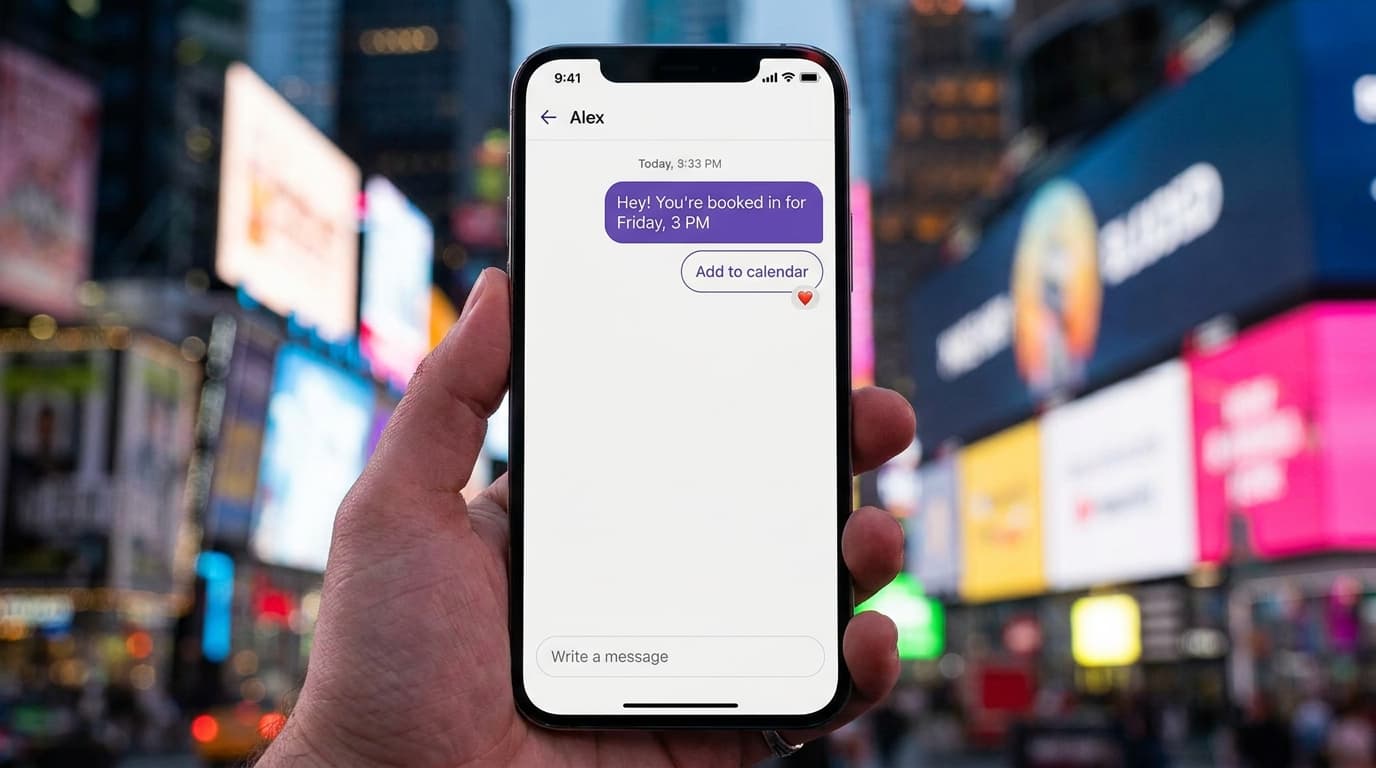
SMS works great for proactive support. Order confirmations, appointment reminders, and delivery updates all feel natural as text messages. Just make sure these outbound messages connect back to your support system so agents can see the full picture when a customer replies.
Self-Service Integration within the Omnichannel Flow
Self-service isn't a separate thing. It's part of the omnichannel flow. Knowledge bases, FAQ pages, and chatbots should all feed into the same system.
Here's where it gets tricky: a significant percentage of customers have had bad chatbot experiences because the bot couldn't understand their question or provide a useful answer. The fix isn't removing chatbots. It's building them with clear escalation paths. When the bot hits its limit, it should hand off to a human agent with the full conversation attached.
Wexio's no-code flow builder lets you design these escalation paths visually. You can set specific triggers: negative sentiment, repeated failed responses, or an explicit request to speak with a person. The bot handles routine questions, and humans handle everything else. Transparency matters here too. Always tell customers they're talking to a bot. Trust erodes fast when people feel tricked.
Optimizing the Agent Experience for Efficiency
Happy agents create happy customers. If your support team is drowning in tabs, toggling between six different tools, and asking customers to repeat themselves, their frustration will bleed into every interaction. Fixing the agent experience isn't a luxury. It's a prerequisite.
Reducing Context Switching for Support Teams
Context switching is a silent productivity killer. Every time an agent jumps from one tool to another, they lose focus. Research on task switching consistently shows that it takes time to regain concentration after each interruption. Multiply that across dozens of conversations per day, and you're bleeding hours of productive time.
The solution is consolidation. Agents should work from a single interface. Their inbox, customer history, internal notes, and response templates should all live in one screen. If an agent needs to open a separate tab to check order status or look up a return policy, that's a design failure.
This "tab-switching tax" chips away at both speed and morale. Agents who feel equipped to do their jobs well stick around longer. Agents who fight their tools every day burn out and leave.
Empowering Agents with Cross-Channel History
Imagine picking up a phone call and already knowing that the customer messaged on WhatsApp yesterday, received a partial refund, and is following up about the remaining balance. That's the power of cross-channel history.
This isn't just about convenience. It changes the tone of the entire interaction. The customer feels recognized. The agent feels prepared. The conversation starts at step five instead of step one.
Cross-channel history also helps with quality assurance. Managers can review the full journey a customer took across channels, spot where things went wrong, and coach agents accordingly. Reviewing chat transcripts regularly is essentially free user research. You'll find logic gaps in your flows, questions you didn't anticipate, and drop-off points where customers give up.
Measuring Success Through Omnichannel Metrics
You can't improve what you don't measure. But traditional single-channel metrics don't tell the full story. You need metrics that capture the cross-channel experience.
Tracking Cross-Channel Resolution Rates
Standard first-contact resolution (FCR) measures whether an issue was solved in one interaction on one channel. Cross-channel resolution rate is different. It tracks whether the issue was resolved across the entire journey, even if the customer switched channels.
A customer might start on chat, get transferred to email for documentation, and confirm resolution via SMS. That's one resolution across three channels. If you're only measuring FCR per channel, you'd see three separate interactions and miss the bigger picture.
Track the median resolution time across channels, not just the average. Averages get skewed by outliers: one nightmare ticket that took two weeks can distort your data. The median gives you a more honest view of typical performance.
Analyzing the Customer Effort Score (CES)
Customer Effort Score measures how easy it was for a customer to get their problem solved. It's a simple post-interaction survey: "How much effort did you have to put in to resolve your issue?" Responses typically use a 1-to-7 scale.
CES is arguably the most important metric for omnichannel support. A low-effort experience means your channels are connected, your agents are informed, and your self-service tools actually work. A high-effort score means customers are repeating themselves, getting bounced between departments, or struggling to find answers.
Track CES by channel and across channels. If your chat CES is great but your phone CES is terrible, you know where to focus. If cross-channel CES is consistently poor, your handoff processes need work.
Future-Proofing Your Omnichannel Strategy
Support expectations shift fast. The channels customers prefer today might not be the ones they prefer next year. Your infrastructure needs to bend without breaking.
Leveraging AI for Predictive Support Personalization
AI in support isn't just about chatbots answering FAQs. The real value is in prediction and personalization. AI can analyze a customer's history and predict what they're likely to contact you about before they even reach out.
Industry experts agree that customers expect their issues anticipated, a full omnichannel experience, and immediate human escalation when self-service tools fall short. AI makes anticipation possible at scale.
Wexio's built-in AI assistants, powered by GPT-4 and Claude, can classify incoming messages, suggest replies, and analyze documents. They handle the repetitive work so agents can focus on complex problems. The platform offers 12+ industry-specific automation templates out of the box, covering everything from appointment booking for salons to loan inquiry routing for financial services.
AI also helps with quality control. Sentiment analysis can flag conversations that are going sideways before they escalate. Pattern recognition can identify recurring issues that deserve a knowledge base article or a product fix.
Scaling Support Infrastructure for Emerging Platforms
New messaging platforms pop up regularly. Five years ago, few businesses offered support on Telegram or Viber. Now they're essential channels in many markets. Your support infrastructure needs to accommodate new channels without a complete rebuild.
The best approach is a modular architecture. Your core system: the CRM, the universal inbox, the routing logic: stays the same. Adding a new channel means plugging it into the existing framework, not building a parallel system from scratch.
Pay-as-you-go pricing models help here too. You shouldn't need to commit to enterprise-level costs just to test a new channel. Start small, measure results, and scale up if the channel proves valuable. Wexio's pricing starts with a free tier offering 100 operations per month: no credit card required: so you can experiment without financial risk.
Also consider security as you scale. Every new channel is a potential vulnerability. Look for platforms with enterprise-grade security: AES-256 encryption, TLS 1.3, and GDPR compliance are non-negotiable, especially if you're in healthcare, finance, or education.
Building Your Omnichannel Future
The gap between what customers expect and what most businesses deliver is still wide. Customers want to move between channels without friction. They want agents who know their history. They want bots that are honest about being bots and that hand off gracefully when they can't help.
Building a true omnichannel support system takes work. You need the right architecture, the right tools, and the right mindset. But the payoff is significant: lower effort scores, faster resolutions, happier agents, and customers who actually want to stick around.
If you're ready to unify your messaging channels and give your team one place to manage every conversation, get started with Wexio. It's a practical first step toward the kind of support your customers already expect.
Sources
- IBM: https://www.ibm.com/think/topics/omnichannel-customer-service
- Plivo: https://www.plivo.com/blog/omnichannel-customer-service-statistics-you-should-know/
- Sprout Social: https://sproutsocial.com/insights/omnichannel-customer-service/
- Aisera: https://aisera.com/blog/omnichannel-customer-support/
- BlueTweak: https://bluetweak.com/blog/customer-support-best-practices-2025/