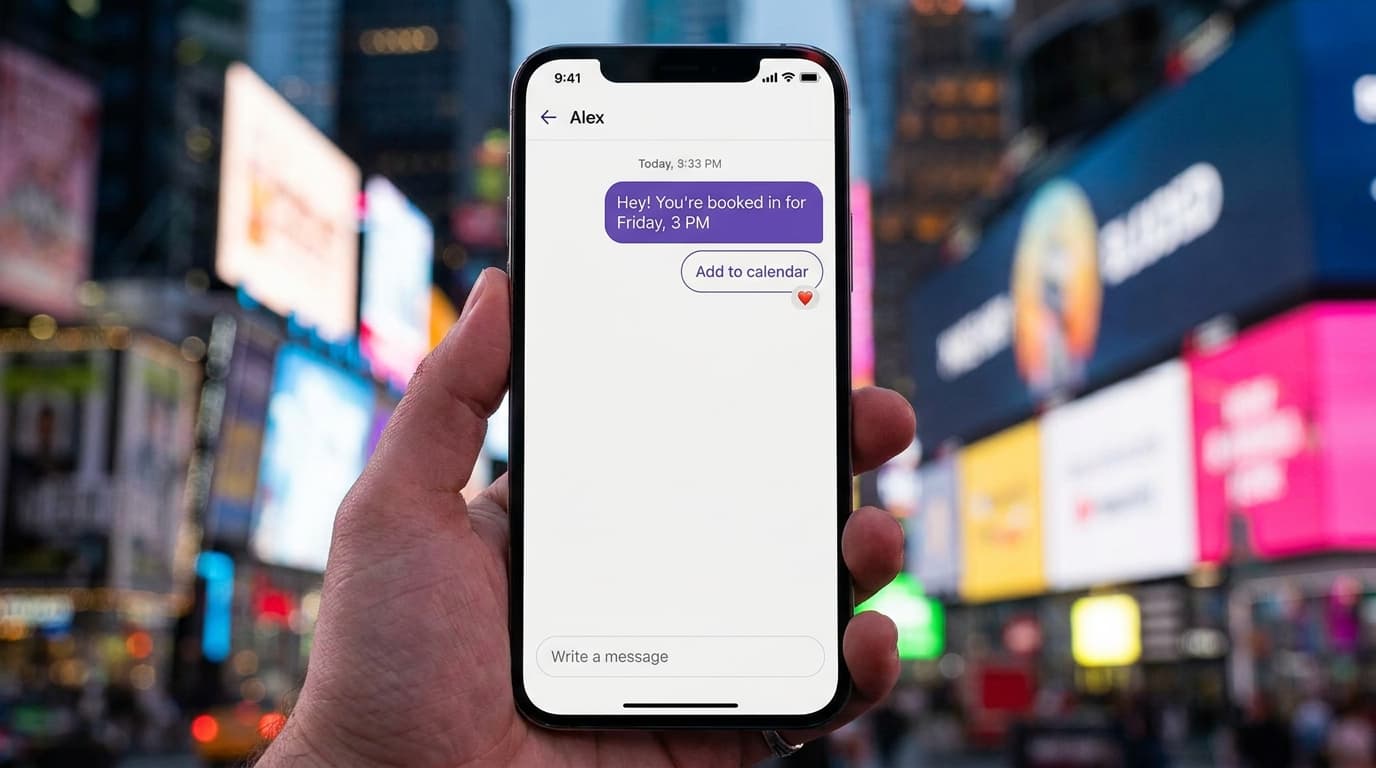
I spent a few years at a WhatsApp BSP before Wexio, and the question I got asked more than any other was some version of "why does a chatbot cost money?" On WhatsApp, the honest answer is: because it always does. Meta charges per message, a BSP adds its cut, and "free" is marketing, not reality.
Telegram is the rare channel where "free" is actually true.
Its Bot API is genuinely free. No per-message fee, no Business Solution Provider in the middle, no application to approve, no monthly platform minimum. You create a bot, you get a token, and it works. For a business that wants to automate customer conversations without a bill attached, that is a big deal, and almost nobody explains where the "free" really starts and where it quietly ends.
So this is the honest version. What a free Telegram chatbot for business genuinely gives you, where costs sneak back in, and the simplest way to run one that actually helps customers.
First, why Telegram is free and WhatsApp isn't
This trips people up because they assume all messaging channels work the same way. They don't.
- WhatsApp is a paid platform. Meta charges per template message, you almost always need a BSP, and there is a whole tiered-pricing world around it. I wrote a full breakdown of that in the free WhatsApp Business API guide, and the short version is: it is never truly free.
- Telegram is the opposite. The Bot API is open and free to use. You talk to a bot called BotFather, it hands you a token, and your bot can send and receive messages at no cost. There is no approval queue and no per-message charge.
That single difference is why "free Telegram chatbot" is a real thing you can build today, and "free WhatsApp chatbot" mostly isn't.
What "free" actually covers on Telegram
Here is what you genuinely get for zero dollars:
- A bot and a token, created in about a minute through BotFather.
- Unlimited messages, within Telegram's rate limits (more on those below). No per-message cost for everyday use.
- Rich message types for free: text, buttons, inline keyboards, images, files, location, contact cards.
- No BSP, no approval, no monthly fee. You are talking straight to Telegram's API.
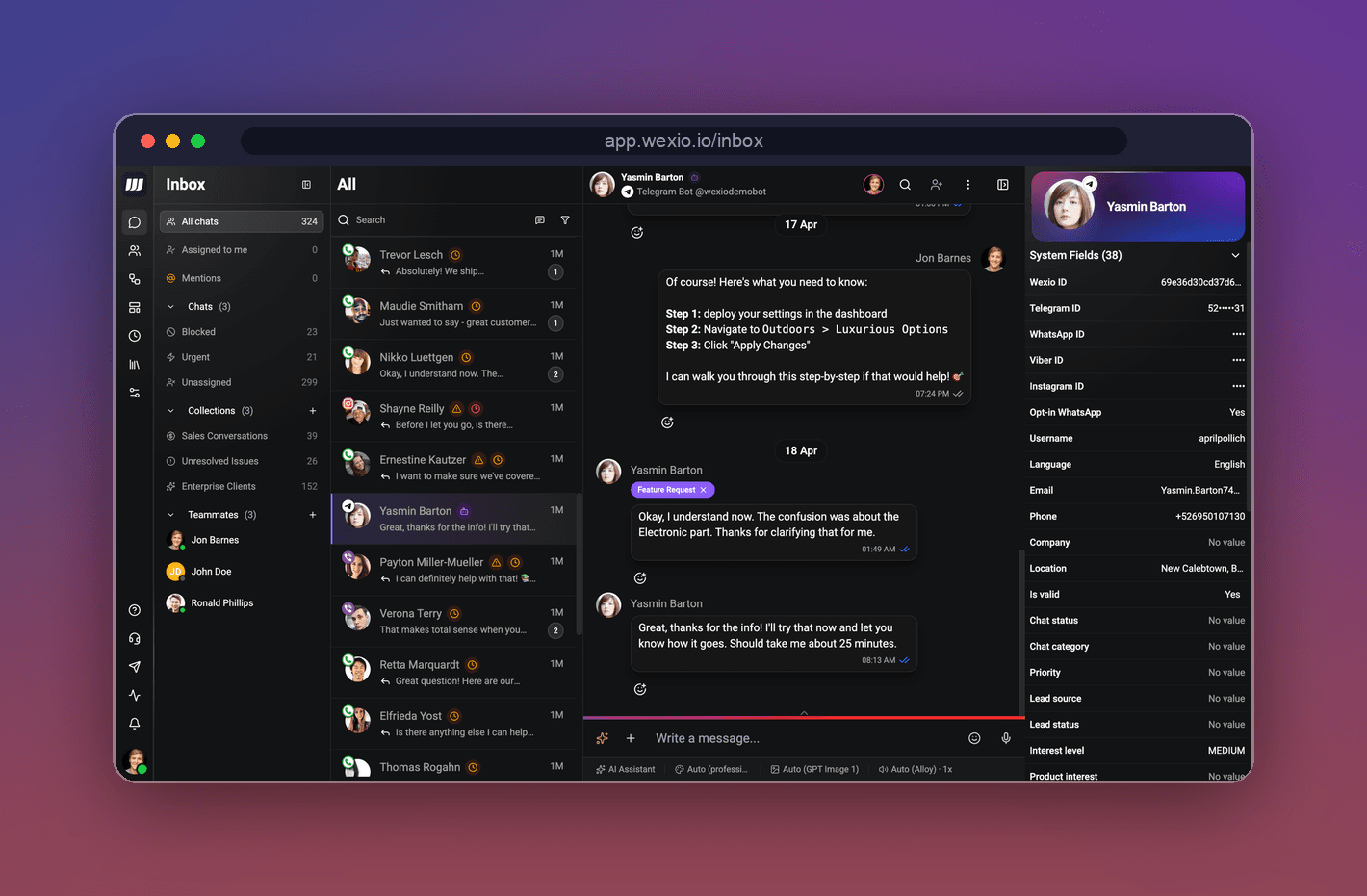 A real Telegram bot conversation in Wexio, answered by AI, with the full customer profile alongside.
The catch that people miss: a bot can't message someone out of the blue. The user has to start the bot first, either by tapping "Start" or opening a deep link (like t.me/yourbot). Once they have, you can reply freely. This is different from WhatsApp's paid outbound templates, and it shapes how you use Telegram: it is fantastic for inbound (a customer messages you and the bot answers instantly) and for people who opted in, not for cold blasting strangers.
The real limits (so you plan around them, not into them)
"Free and unlimited" still has guardrails, and they are generous but real:
- Roughly 30 messages per second to different users.
- About 1 message per second to a single chat.
- Around 20 messages per minute into the same group.
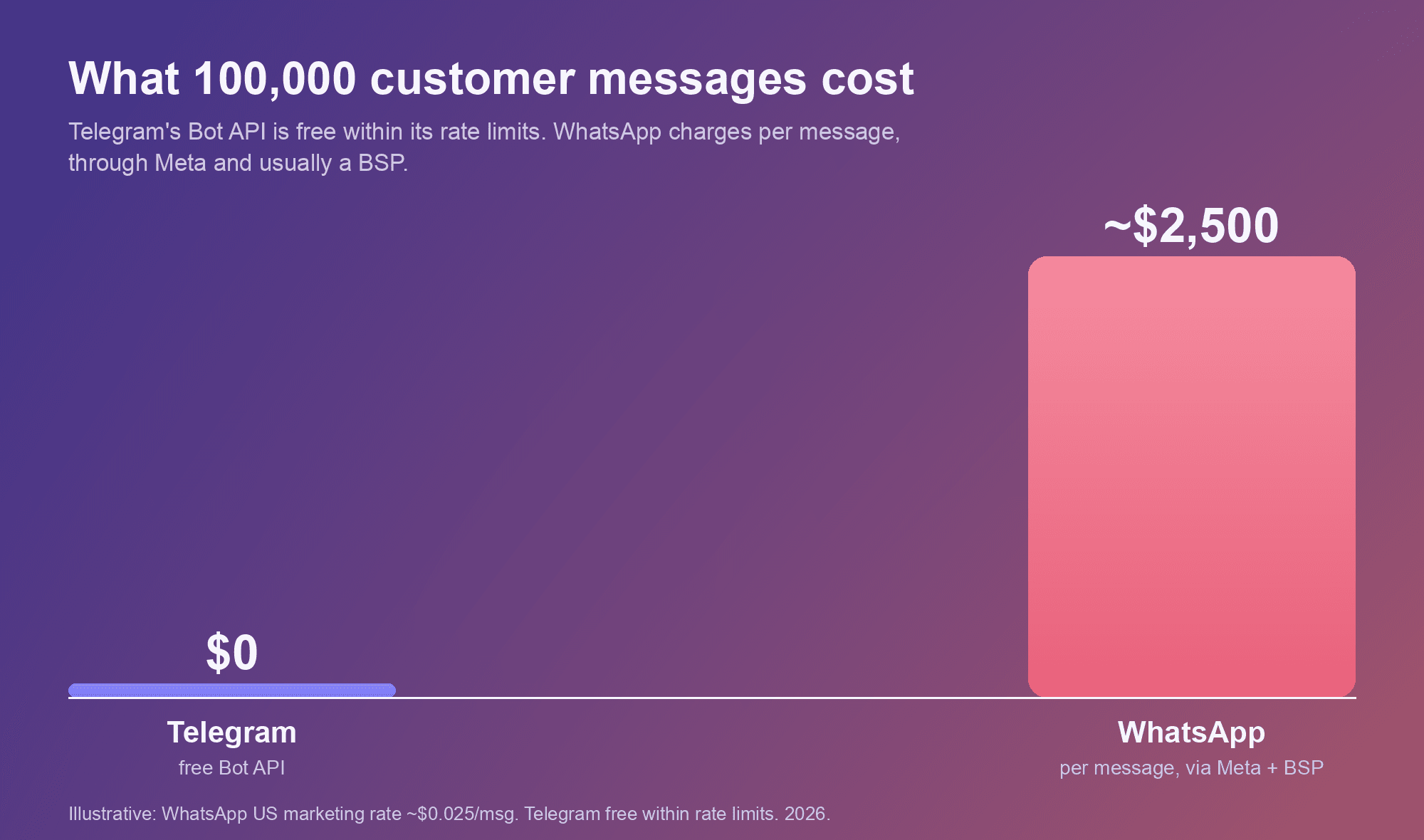
For normal customer support and Q&A, you will never touch these. They only matter if you are broadcasting to thousands at once, and even then you just pace the sends. Compare that to WhatsApp, where every one of those messages has a price tag, and the appeal of Telegram is obvious.
There is exactly one paid exception, and it is worth naming so "free" stays honest. If you ever need to broadcast faster than about 30 messages a second, Telegram offers an optional Paid Broadcasts tier that charges a fraction of a cent per extra message (paid in Telegram Stars). It is gated behind having 100,000 users and a 100,000-Star balance, so a normal business bot never comes near it. For everyday support, replies, and reasonable broadcasts, you pay nothing.
Where "free" quietly ends
The bot is free. Running a real operation around it is where costs come back, and being straight about this is the whole point.
- Hosting. If you code the bot yourself, it has to run somewhere: a small server or a serverless function. That is a few dollars a month, not zero.
- AI. A bot that just follows a script is free. A bot that actually understands a customer's question needs an AI model behind it, and models cost money per use (OpenAI, Anthropic, and so on). This is usually the real cost of a "smart" bot.
- A team inbox. One founder can watch a bot's chats in Telegram. A team answering hundreds of conversations needs a shared inbox, assignments, and history, which is what platforms charge for.
- Doing things, not just talking. Booking, taking a payment, updating a CRM, handing off to a human: that is automation and integration work on top of the free bot.
So the honest framing is: the Telegram bot is free, the intelligence and the operation around it are what you pay for, and even that can be cheap.
Three ways to run a free Telegram chatbot
1. Raw Bot API (BotFather plus code)
Create the bot, get the token, and write the code that listens for messages and replies. Truly free at the Telegram layer, and completely yours.
Best for: developers who want full control and don't mind building and hosting everything. Gotcha: you build the inbox, the logic, the AI, and the hosting. The token is free; your time isn't.
2. A no-code chatbot builder
Plenty of tools let you connect a Telegram bot and design flows with drag-and-drop, often on a free or freemium tier. Faster than code, no server to babysit.
Best for: non-technical teams who want a working bot this afternoon. Gotcha: free tiers are capped (contacts, messages, features), and AI is usually a paid add-on. I compared the landscape in our no-code chatbot builders roundup.
3. Connect it to a platform that handles the rest
Instead of building the inbox and AI yourself, connect your Telegram bot to a tool that already has them, and keep the bot free while getting real answers, a team inbox, and actions on top.
Best for: businesses that want the bot to actually resolve things, not just echo a menu. Gotcha: the platform has its own pricing, so pick one whose model fits how much you'll use it.
Set one up in 5 minutes
The free-bot part is genuinely quick. Here it is end to end.
Create the bot (about a minute):
- Open @BotFather in Telegram (
t.me/BotFather). - Send
/newbot. - Give it a display name, like "Acme Support".
- Give it a username ending in "bot", like
acme_support_bot. - BotFather hands you an API token. Copy it, and keep it secret (anyone with it can control your bot).
 One
One /newbot command and BotFather hands you a free token, that is the whole "create a bot" step.
That is your free Telegram bot done. On its own it can send and receive, but it doesn't know anything yet. To make it actually answer customers, connect it to a platform.
Connect it to Wexio (about two minutes):
- Go to Settings, then Integrations, and click Connect next to Telegram.
- Paste the bot token.
- Click Connect. The webhook configures itself and your bot goes live.
- Message your bot to test, and the conversation shows up in your Wexio inbox, answered by AI.
The full walkthrough is in our Telegram setup docs.
Where Wexio fits
Disclosure: I run Wexio, so weigh this accordingly. But Telegram is one of the two channels that are live for us today (web chat is the other), so this isn't a "coming soon" pitch, it is the thing we actually do.
You connect your free Telegram bot to Wexio in a couple of minutes, and from there the bot stops being a script and starts being useful. Our AI answers customer questions instantly, grounded in your own content, and it doesn't just chat: it books, takes a Stripe payment, updates your records, and hands off to a human when it should. Every conversation lands in one inbox with full customer profiles, so a small team never loses track.
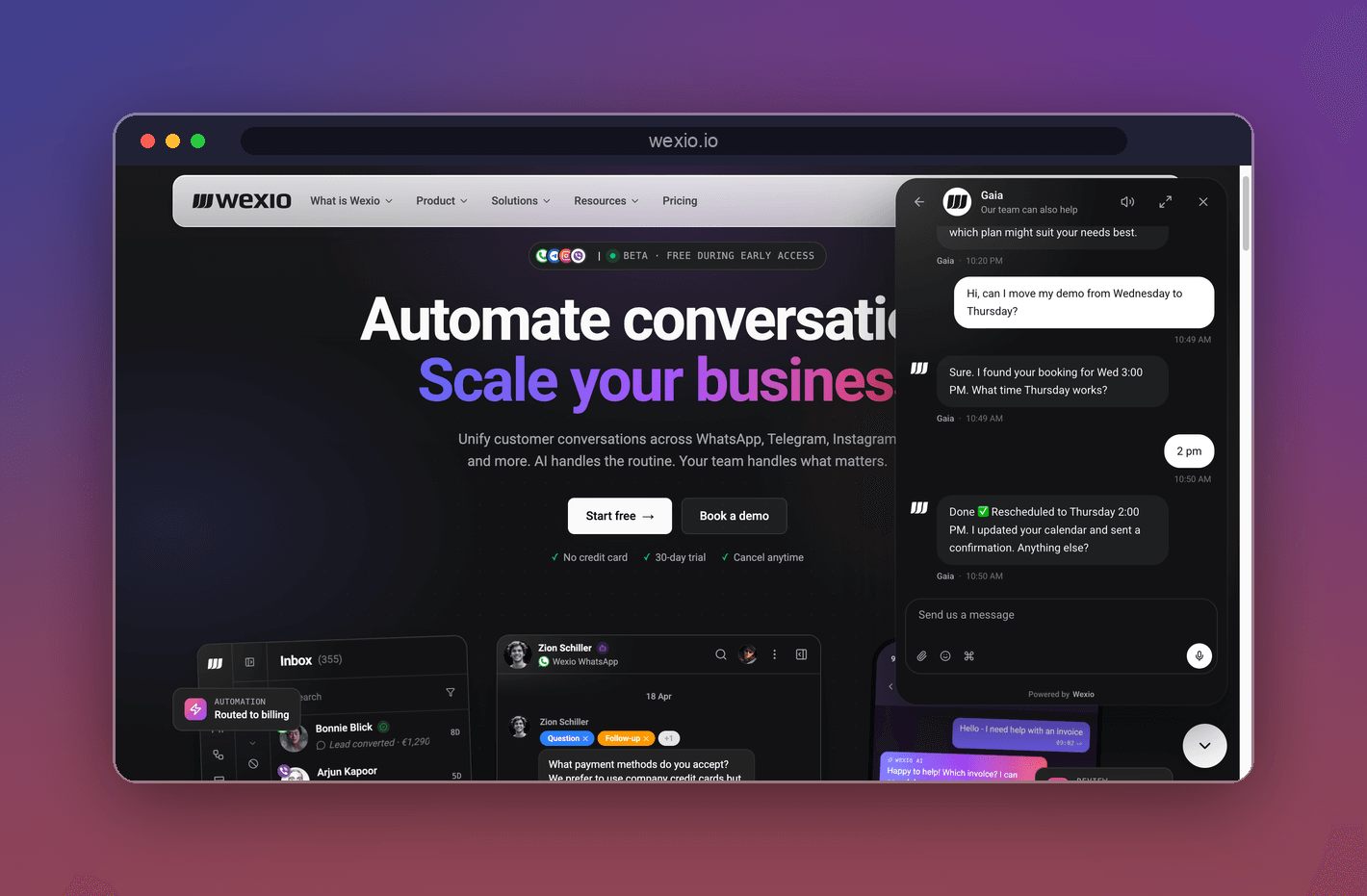 Not just answering: the AI books, takes payments and updates records, then hands off to a human when it should.
On cost, the Telegram side stays free (that's Telegram's Bot API, not us), and Wexio is usage-based with a free plan to start. The AI is built in, or you can bring your own OpenAI or Anthropic key and pay the model directly with no markup, which is the same honesty point I made in the intercom alternatives piece: you shouldn't pay a per-answer toll on top of the model.
If you outgrow Telegram and want WhatsApp too, that's rolling out, and the cost math there is a completely different animal, which I broke down in the best WhatsApp Business API providers for high volume. For a genuinely free start, though, Telegram is hard to beat.
FAQ
Is a Telegram chatbot really free? The bot and the Bot API are, yes: no per-message fee and no BSP. The one exception is an optional Paid Broadcasts tier for sending faster than about 30 messages a second, which only huge bots (100,000-plus users) ever hit. What costs money for the rest of us is the hosting, the AI, and the team tooling you add around it. The messaging itself is free.
Can the bot message customers first? Not cold. A user has to start your bot (tap Start or open a t.me/yourbot link) before you can message them. After that, you can reply freely. It shines for inbound and opted-in audiences.
How is this different from WhatsApp? WhatsApp charges per message through Meta and a BSP; Telegram doesn't. If "free" is the priority, Telegram wins outright. If you specifically need WhatsApp's reach, that's a paid channel, and I'd point you to our Telegram chatbot roundup and the WhatsApp providers guide to compare.
Do I need to code? No. Coding gives you full control, but a no-code builder or a platform like Wexio lets you connect a free Telegram bot and add AI without writing anything. More real-world Telegram workflows are in our using Telegram for business guide.
The one-line version
A free Telegram chatbot for business is real, not a gimmick: the Bot API costs nothing, unlike WhatsApp. Just know that "free" covers the bot, while the AI, the inbox, and the actions around it are what you invest in, and even that starts at zero.