Your service department's phone rings. And rings. And rings. A customer who just wants to book an oil change hangs up after three minutes on hold, then drives to a competitor down the road. That scenario plays out thousands of times every day across dealerships and independent shops. The cost isn't just one missed appointment: it's a lifetime of lost revenue from a customer who won't come back.
AI chatbots for automotive service scheduling are changing this dynamic fast. Instead of forcing customers through phone trees and hold music, shops are deploying automated assistants that book, confirm, and manage appointments around the clock. These aren't clunky bots that spit out canned responses. They're intelligent systems that pull vehicle history, suggest the right service, and slot appointments into real-time calendars without a single human picking up the phone.
The shift matters because your service department is likely your biggest profit center. Fixed operations can account for nearly half of a dealership's gross profit, according to NADA data. Every missed call is money left on the table. Every no-show is a bay sitting empty. And every frustrated customer is a review you'd rather not read. The good news? Fixing these problems doesn't require a massive IT overhaul. It requires smarter scheduling, and that's exactly what AI-powered chat automation delivers.
The Shift Toward Automated Automotive Service
The automotive service industry has been slow to digitize compared to retail or hospitality. Many shops still rely on the same booking methods they used twenty years ago: a phone call, a receptionist, and a paper calendar (or a clunky desktop app). That's starting to change, driven by customer demand and competitive pressure.
Limitations of Traditional Phone-Based Booking
Phone-based scheduling bleeds time for everyone involved. Your service advisors spend 8 to 12 minutes per call handling routine bookings. That's time they could spend upselling, advising, or managing the shop floor. Customers don't love it either. A Salesforce study found that 66% of consumers expect companies to understand their needs instantly. A five-minute hold time doesn't communicate understanding.
Then there's the error factor. Misheard phone numbers, wrong appointment times, double-bookings: these mistakes chip away at trust. They also create downstream chaos when a customer shows up at 9 AM for an appointment your system says is at 2 PM. Phone-based booking works until it doesn't, and it fails most often during your busiest hours when you can least afford it.
Meeting Modern Consumer Expectations for Instant Gratification
Your customers book flights, order groceries, and schedule doctor visits from their phones in under two minutes. They expect the same from their mechanic. A 2023 HubSpot report showed that 82% of consumers rate an "immediate" response as important when they have a service question. Immediate means seconds, not minutes.
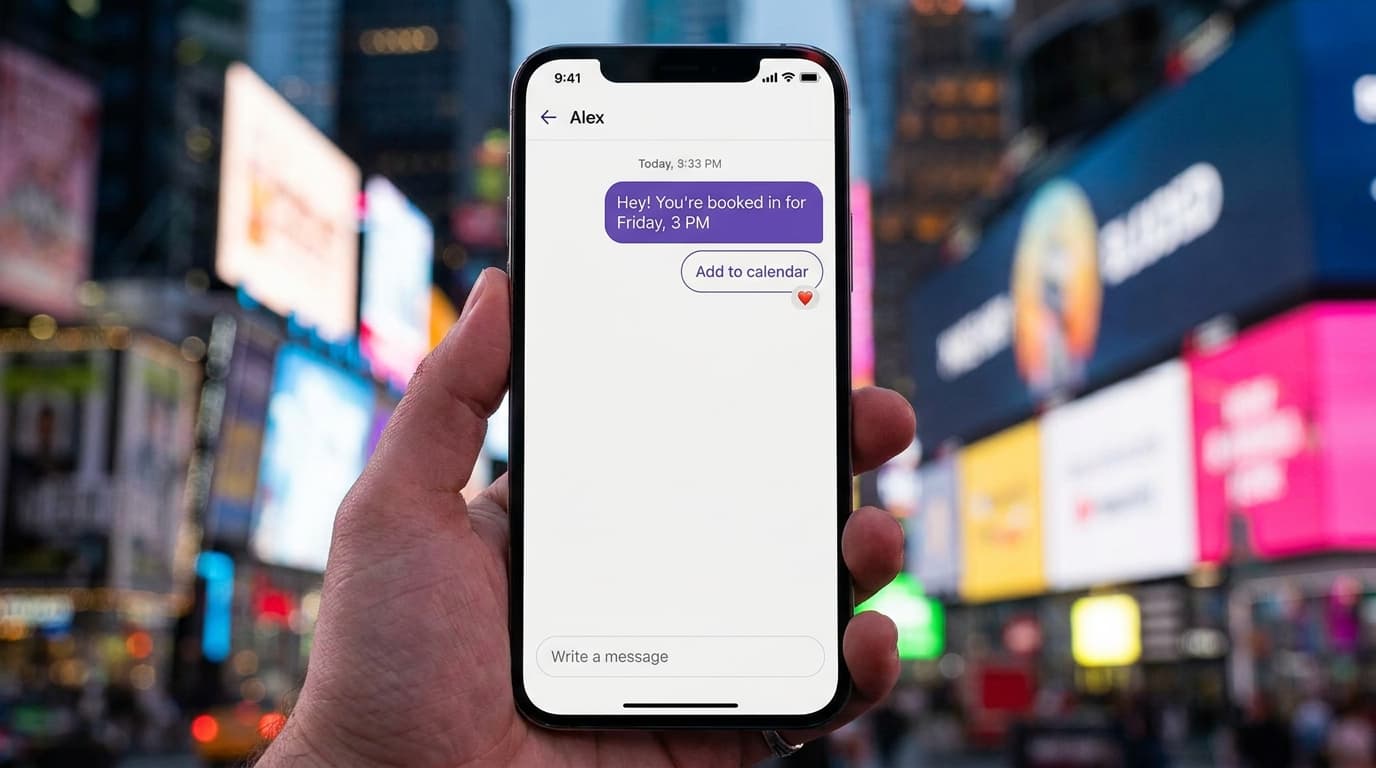
This expectation gap is where AI chat assistants thrive. A customer texts your shop at 10 PM on a Tuesday. The bot responds in under three seconds, asks what service they need, checks availability, and confirms the booking. No hold time. No voicemail. No "we'll call you back tomorrow." The customer gets what they want, and your calendar fills up while you sleep.
24/7 Availability and Real-Time Appointment Syncing
The biggest single advantage of automated scheduling is obvious: it never clocks out. Your shop might operate from 7 AM to 6 PM, but your customers think about car maintenance at all hours.
Eliminating After-Hours Booking Barriers
Studies from various CRM providers consistently show that 30% to 40% of online bookings happen outside traditional business hours. That's a massive slice of revenue that phone-only shops simply miss. An AI chatbot catches every one of those after-hours requests and converts them into confirmed appointments.
Think about the typical customer journey. Someone notices their check-engine light on the drive home. They pull into their driveway at 7:30 PM and grab their phone. If your shop offers instant chat booking on WhatsApp or your website, you've got that appointment. If you don't, they'll Google "mechanic near me" and find someone who does.
Direct Integration with Dealership Management Systems (DMS)
A chatbot that books appointments into a standalone calendar creates more problems than it solves. The real value comes from direct integration with your DMS or shop management software. When the bot connects to your system, it sees real-time bay availability, technician schedules, and estimated job durations.
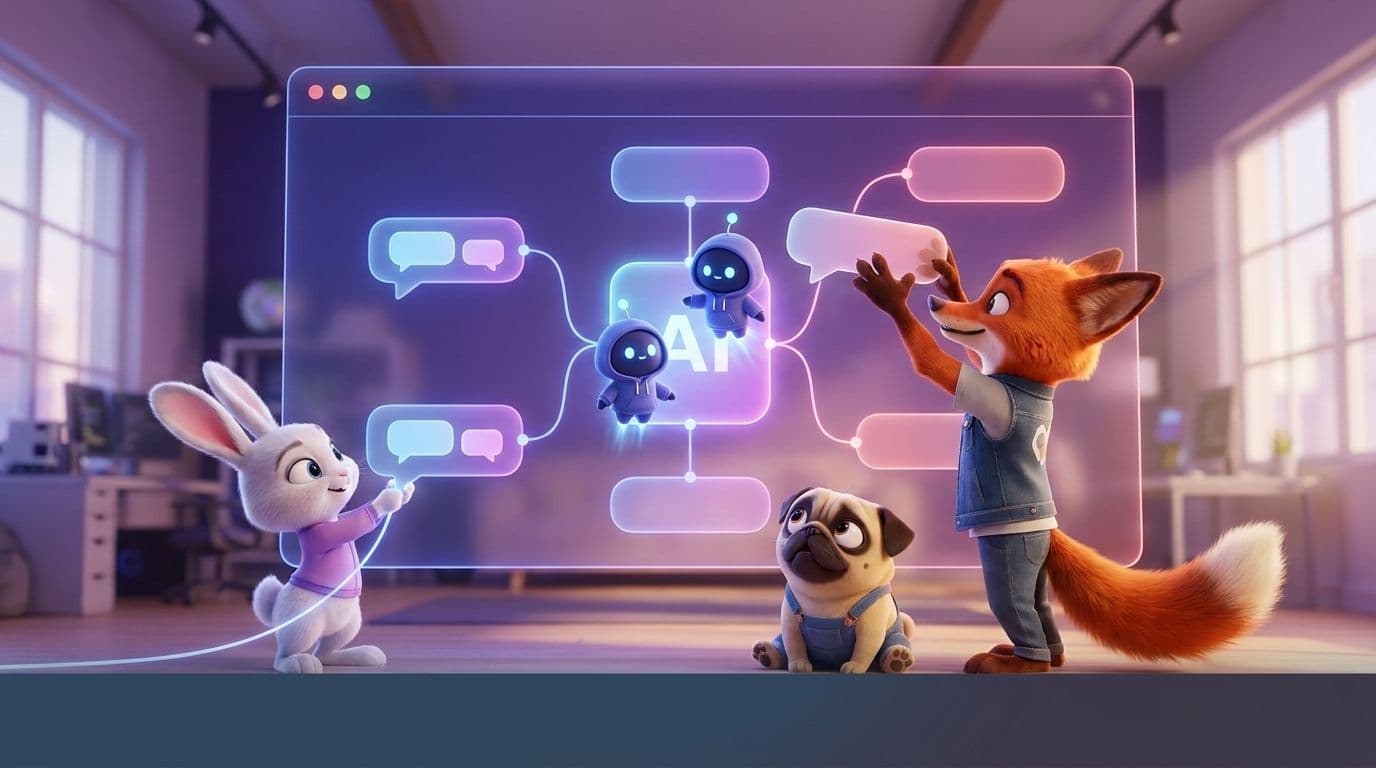
This means no double-bookings and no manual data entry. The appointment flows straight into your workflow. Platforms like Wexio make this kind of integration practical even for smaller shops. Their no-code visual flow builder lets you connect your scheduling system, set up conditional logic (like routing diesel truck appointments to your diesel-certified tech), and go live without writing a single line of code. The bot doesn't just book: it books intelligently based on your actual capacity.
Enhancing Customer Experience Through Personalization
Generic interactions feel generic. Customers notice when a business remembers their vehicle, their history, and their preferences. AI chat systems can deliver that personal touch at scale.
Automated Maintenance Reminders and VIN Recognition
One of the most valuable features of AI-powered service scheduling is proactive outreach. Instead of waiting for customers to remember their 30,000-mile service, the system can send a reminder via SMS or WhatsApp based on their last visit date and mileage estimate.
VIN recognition takes this further. When a returning customer initiates a chat, the bot can pull their vehicle identification number and instantly access make, model, year, and service history. "Hi Sarah, your 2021 RAV4 is due for a tire rotation based on your last visit in March. Want to book that for this week?" That kind of message converts at a much higher rate than a generic "Schedule your service today!" blast.
The system can also flag open recalls tied to a specific VIN. This is a win for the customer's safety and a win for your shop's revenue, since recall work is manufacturer-paid.
Multi-Channel Support Across Web, SMS, and Social Media
Your customers don't all communicate the same way. Some prefer texting. Others use WhatsApp. A growing number reach out through Instagram DMs. If your booking system only lives on your website, you're ignoring half the conversation.
Multi-channel support means meeting customers where they already are. A platform with a unified inbox lets your team (and your AI assistant) manage conversations from WhatsApp, Telegram, Instagram, and SMS in one place. No tab-switching tax. No messages falling through the cracks. Wexio's omnichannel dashboard is built for exactly this scenario, pulling every customer interaction into a single view regardless of which app they used to reach you.
This approach also lets you run targeted campaigns. Send a winter tire promotion via WhatsApp to customers in cold-weather regions. Push a brake inspection special through SMS to customers whose last brake service was over 18 months ago. The channel flexibility makes your outreach more relevant and less annoying.
Optimizing Service Center Efficiency and Revenue
Filling your calendar is only half the battle. Keeping it full and maximizing the value of each visit is where the real gains show up.
Reducing No-Show Rates with Automated Confirmations
No-shows are a silent killer for service departments. Industry estimates put the average no-show rate for auto service appointments between 10% and 15%. For a shop running 40 appointments a day, that's four to six empty bays. Multiply that by your average repair order value and the annual cost is staggering.
Automated confirmation sequences cut no-show rates dramatically. Here's a simple flow that works:
- Immediate booking confirmation via the customer's preferred channel
- A reminder 48 hours before the appointment with a one-tap confirm or reschedule option
- A same-day reminder two hours before the scheduled time
- If no confirmation, an automatic waitlist promotion to fill the slot
This sequence runs without any human involvement. Your service advisors don't chase down confirmations. The bot handles it, and your bays stay full.
AI-Driven Upselling of Necessary Maintenance Packages
Here's where AI chatbots start paying for themselves many times over. During the booking conversation, the bot can suggest relevant add-on services based on the vehicle's history and mileage.
A customer booking an oil change on a vehicle with 45,000 miles might see: "Based on your mileage, your manufacturer recommends a transmission fluid change at 50,000 miles. Want to add that to your visit?" It's not pushy. It's helpful. And it increases your average repair order value without your advisors needing to pitch anything.
The key is relevance. AI systems trained on service data can identify which recommendations convert and which ones customers ignore. Over time, the suggestions get smarter. A well-tuned upsell flow can increase per-visit revenue by 15% to 25% without adding any pressure to the customer interaction.
Overcoming Common Implementation Challenges
No technology rollout is friction-free. The shops that succeed with AI scheduling are the ones that plan for the common stumbling blocks.
Ensuring Data Security and Privacy Compliance
Customer vehicle data, contact information, and payment details flow through your scheduling system. That's sensitive information, and a breach can destroy trust overnight. Any AI chatbot platform you consider needs to meet strict security standards.
Look for AES-256 encryption at rest, TLS 1.3 for data in transit, and GDPR compliance if you serve customers in regulated markets. SOC 2 readiness is another strong signal. Wexio, for example, hosts its infrastructure in the EU and meets these benchmarks, which matters if your customers (or your legal team) care about where data lives and how it's protected.
You should also establish clear data retention policies. How long do you keep chat transcripts? Who can access customer records? These aren't just compliance checkboxes: they're trust builders. Customers who know their data is handled responsibly are more likely to engage with your automated systems.
Balancing AI Automation with Human Service Advisor Handoffs
Not every conversation should stay with the bot. A customer describing a strange noise under the hood needs a human ear. Someone frustrated about a previous repair needs empathy, not a menu of options.
The best implementations define clear handoff triggers:
- Negative sentiment detected: The bot routes to a live advisor when language signals frustration or anger.
- Repeated failed responses: If the bot can't resolve a query after two attempts, it escalates immediately.
- Explicit request: "I want to talk to a person" should always work, instantly.
- Complex diagnostics: Symptom descriptions that don't match standard service categories get flagged for human review.
Wexio's "Route to Operator" feature handles this transition smoothly. The conversation history transfers to the human advisor, so the customer doesn't repeat themselves. That continuity matters more than most shops realize. Repeating information is one of the top customer service frustrations cited in Forrester research.
A practical tip: review your chat transcripts weekly. They're free user research. You'll spot logic gaps in your bot flows, discover questions you didn't anticipate, and identify where customers drop off. Use that data to refine your automation continuously.
The Future of AI in Automotive Aftersales Support
AI-powered scheduling is just the entry point. The technology is moving toward predictive service, where connected vehicles send diagnostic data directly to your shop's system. Imagine a scenario where a customer's car flags a battery degradation pattern, your AI assistant automatically reaches out with a replacement appointment, and the part is pre-ordered before the customer even knew there was a problem.
We're not there yet for most shops, but the building blocks exist today. Shops that adopt AI chat scheduling now are building the data foundation and customer habits that make these future capabilities possible. The ones that wait will be playing catch-up.
The most important step is starting small. Pick one channel. Automate your most common booking type. Measure the results. Then expand. You don't need to automate everything on day one. You just need to stop losing customers to hold music.
If you're ready to bring AI-powered scheduling and customer engagement to your shop across WhatsApp, SMS, Instagram, and more, Wexio's platform makes it surprisingly simple to get started. With 12+ industry-specific templates and a free tier that requires no credit card, there's no reason not to test it. Get started here.